The Best Step-By-Step Venezuelan Hallacas Recipe Ever!
Today’s recipe is very special to me: My mom’s Venezuelan Hallacas recipe! You might be wondering…
What Is Hallacas?
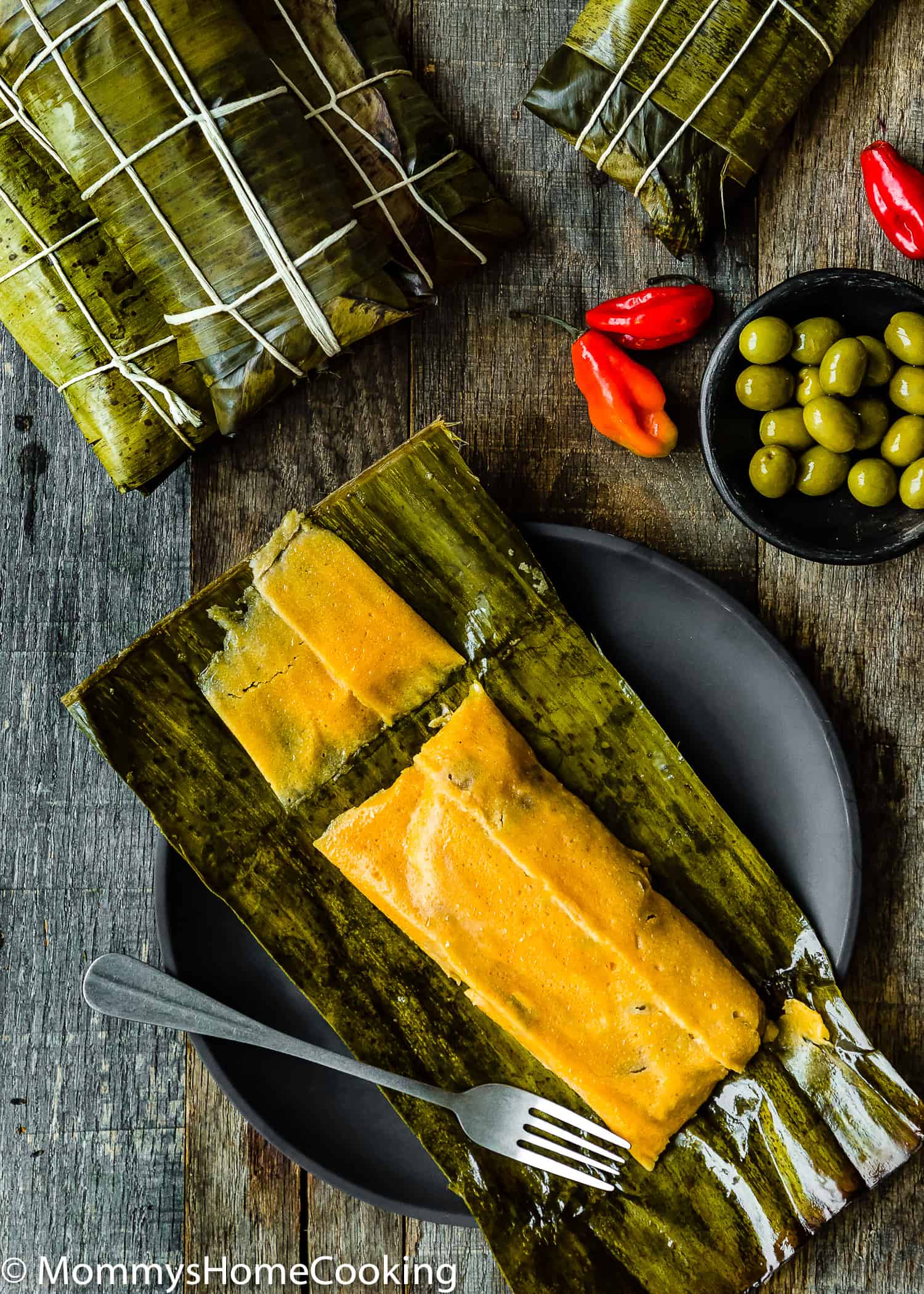
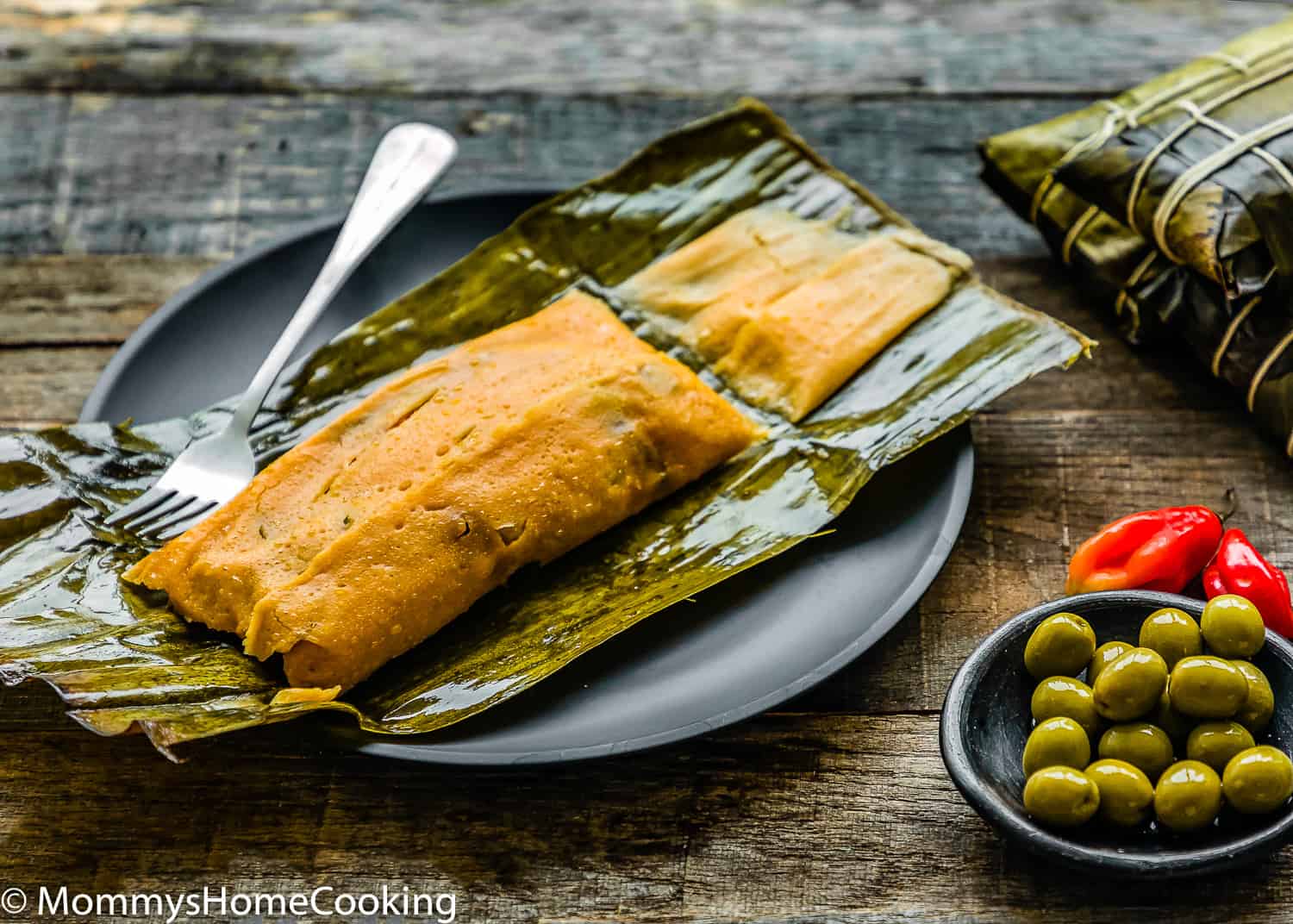
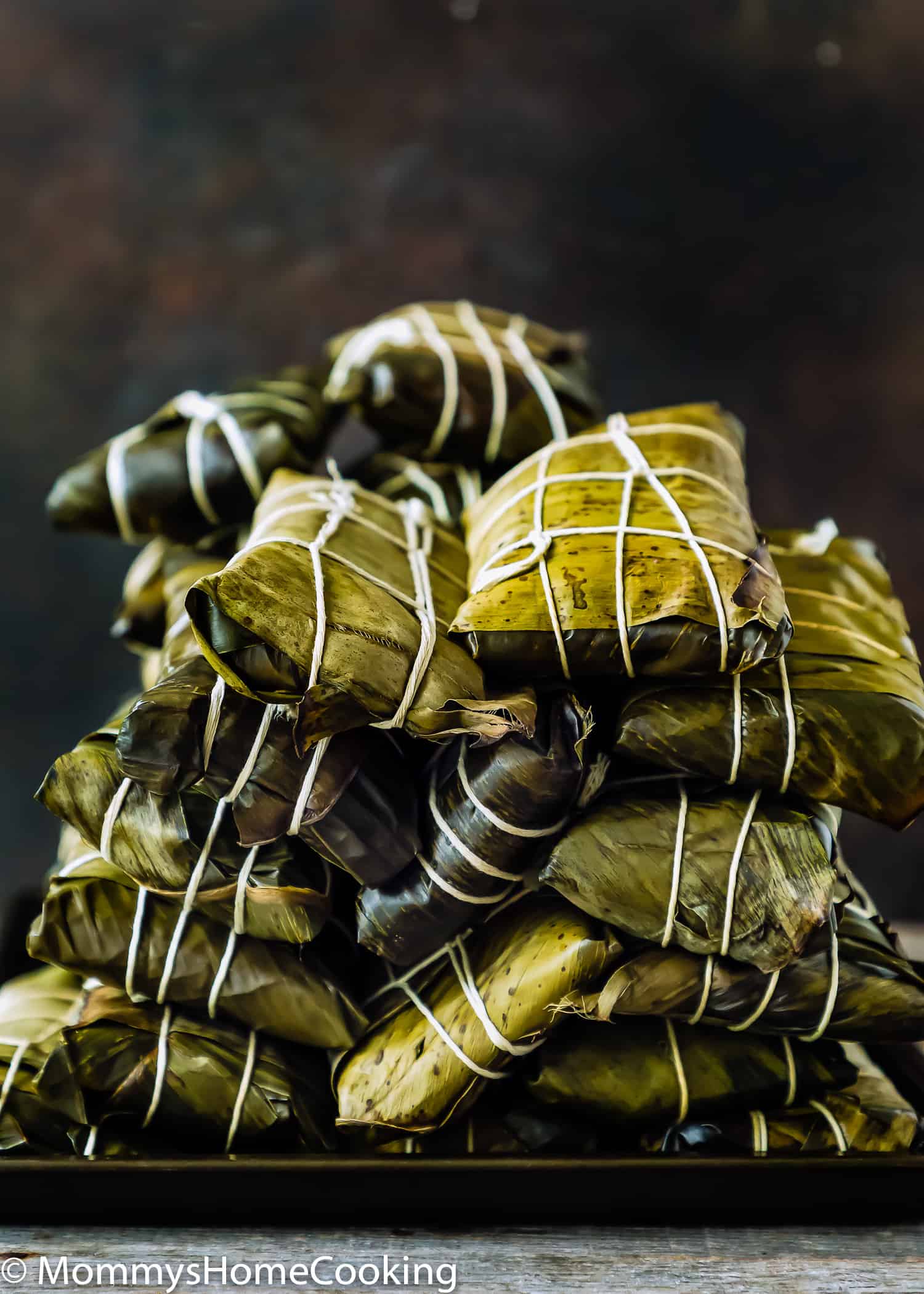
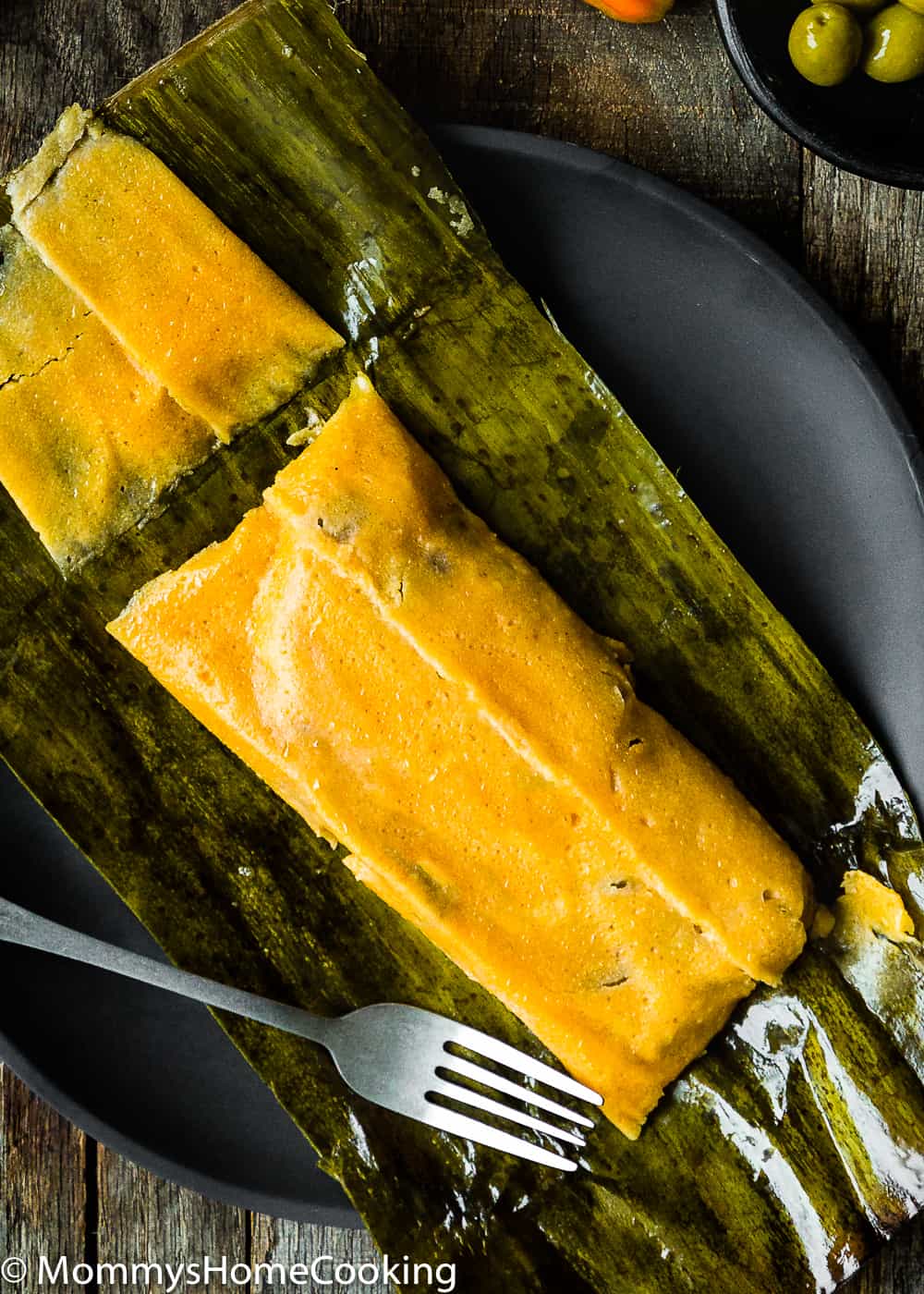
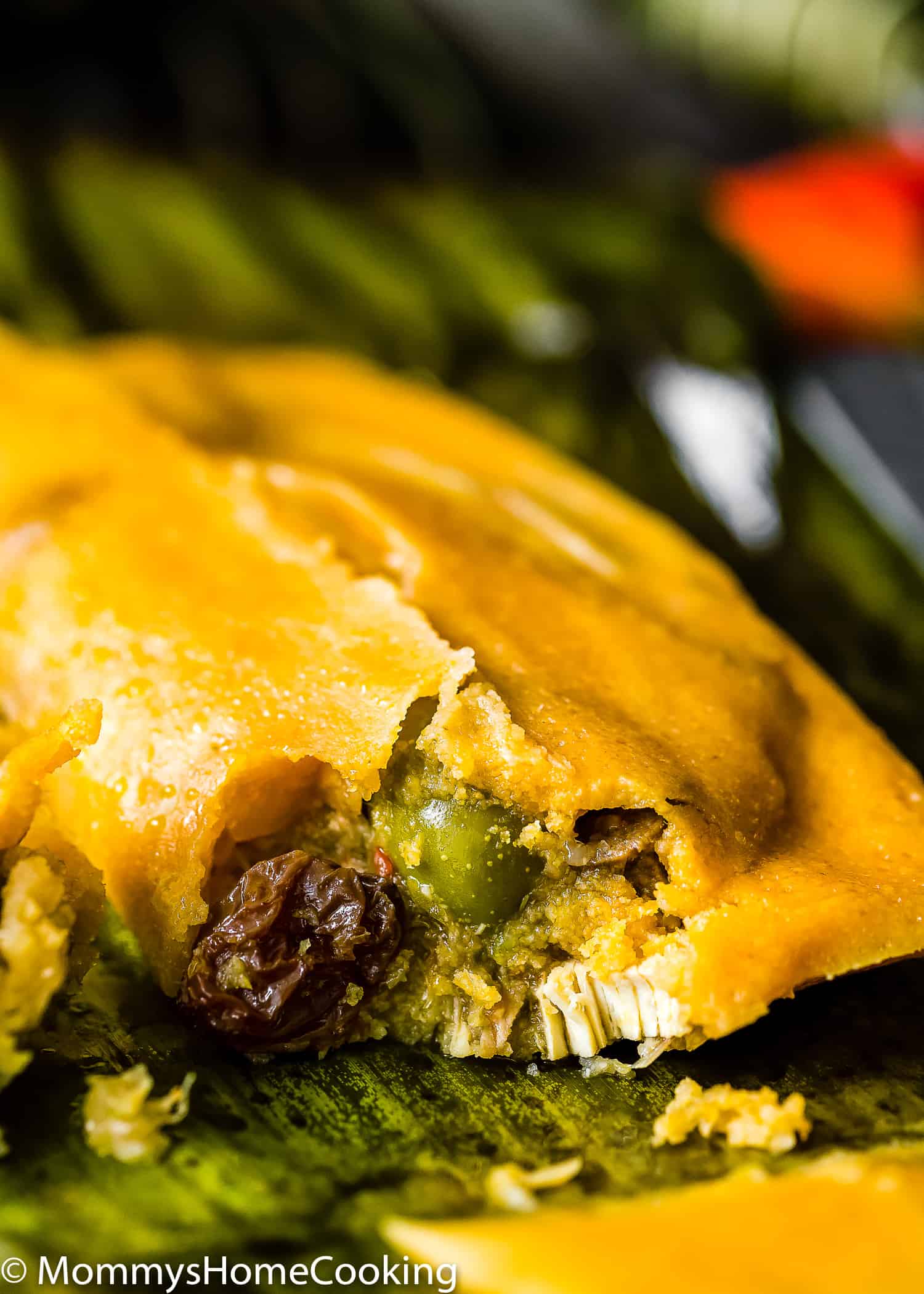
Hallacas are the traditional Venezuelan tamales. It’s no more than a thin layer of corn dough stuffed with a meat filling made with beef, pork, and chicken and topped with several ingredients, such as onion rings, bell pepper, raisins, olives, etc. Then wrap in plantain leaves, tie, and boil. This dish is traditionally served during the Christmas season, and it can vary depending on the region and family traditions. Making hallacas can be a daunting process; at least, I know it is for me, so I did my best to explain every step, tip, and trick that I have learned from my mom, who has been making hallacas for more than 60 years. This Venezuelan Hallacas recipe represents my family’s version of the Hallaca Caraqueña…Let’s get started!
5 kg banana leaves, smoked (I used 10 packs (500 g each) of frozen leaves) 4 cups (1 L) vegetable or corn oil 200 g onoto, annatto, achiote seeds 3 beef bouillon cubes 2 leeks 4 green onions 10 oz (300 g) garlic cloves 6 yellow onions 3 green bell peppers 3 red bell peppers 18-20 sweet peppers 1 ½ kg beef, pork, and chicken (see notes in the recipe card) 3 oz (80 g) capers 1 bottle of sweet red wine (see notes in the recipe card) 3 packs (1kg each) Harina P.A.N 12 oz (340 g) black raisins 21 oz (600 g) Green Olives (see notes in the recipe card) 16 oz (450 g) Italian Mix Giardiniera pickles (encurtidos) 6 medium white potatoes Salt Black pepper Cooking Twine (pabilo)
Step 1 – Buy all the ingredients. Make a list, and make sure you have everything before you get started. Some ingredients can be hard to find, depending on where you live. So plan ahead and order online whatever is not available.
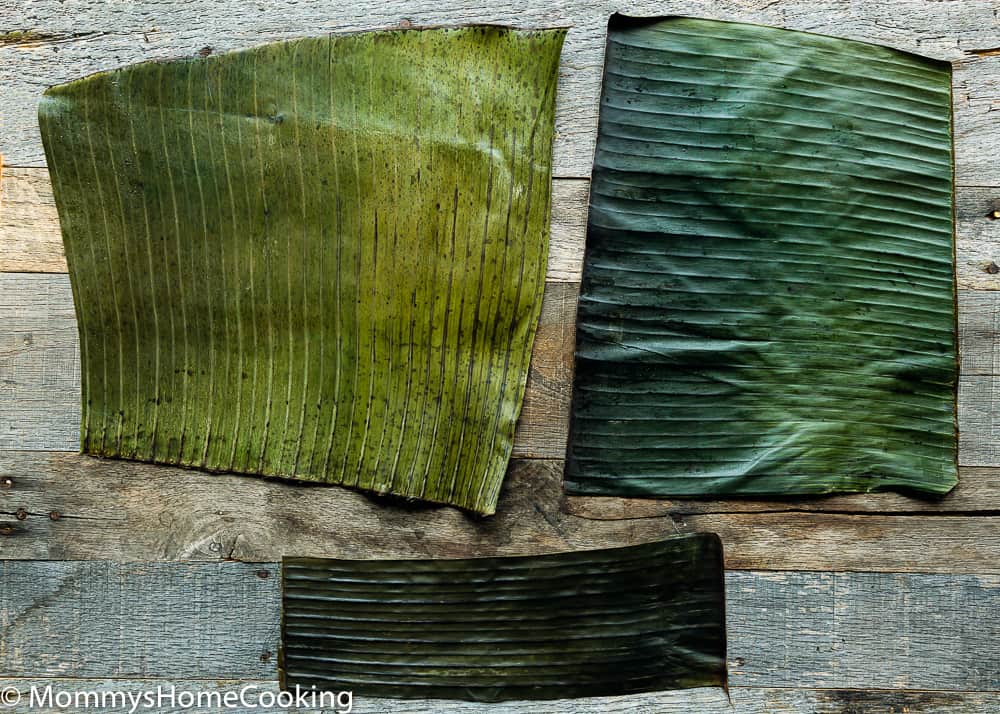
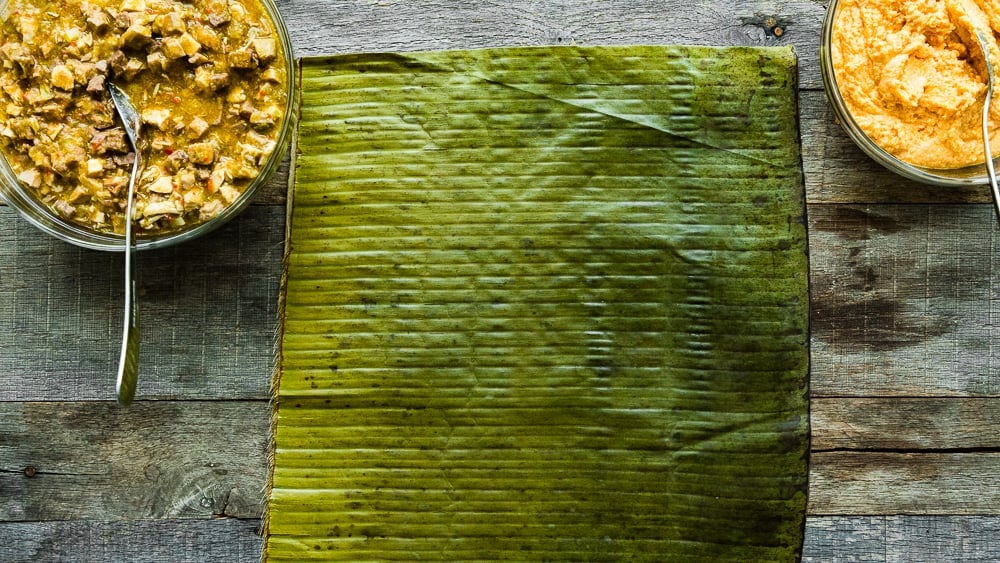
Step 2 – Prepare the leaves. Clean and cut the leaves as instructed below. You can do this the day before. Make sure you buy frozen or smoked banana leaves. The fresh ones will break when wrapping.
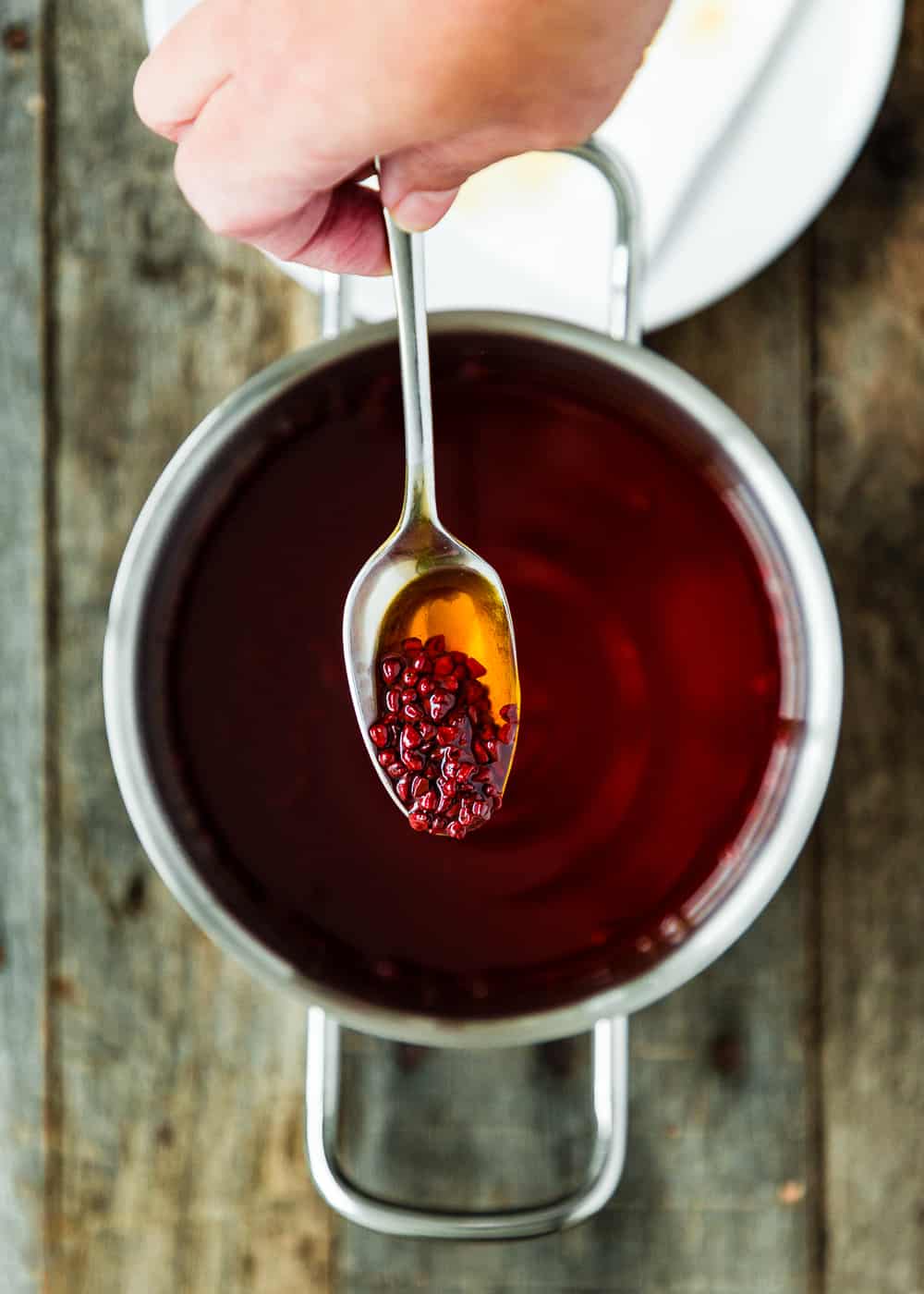
Step 3 – Make the Onoto Oil. The oil needs time to cool down, so I like to make it the day before. Make sure you don’t boil the oil, or it will be bitter.
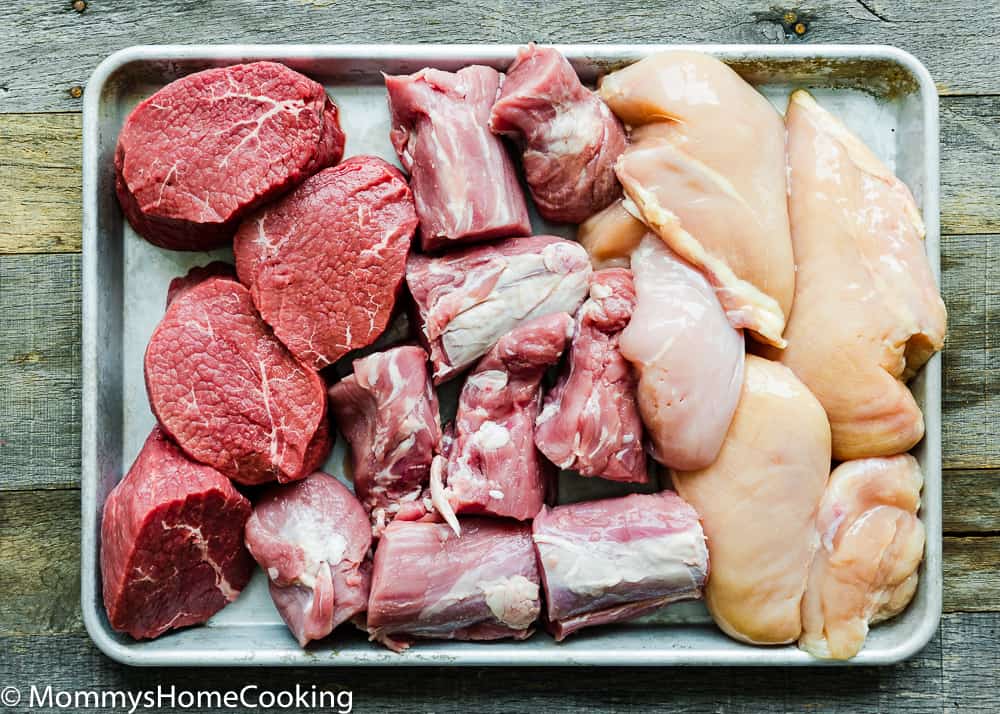
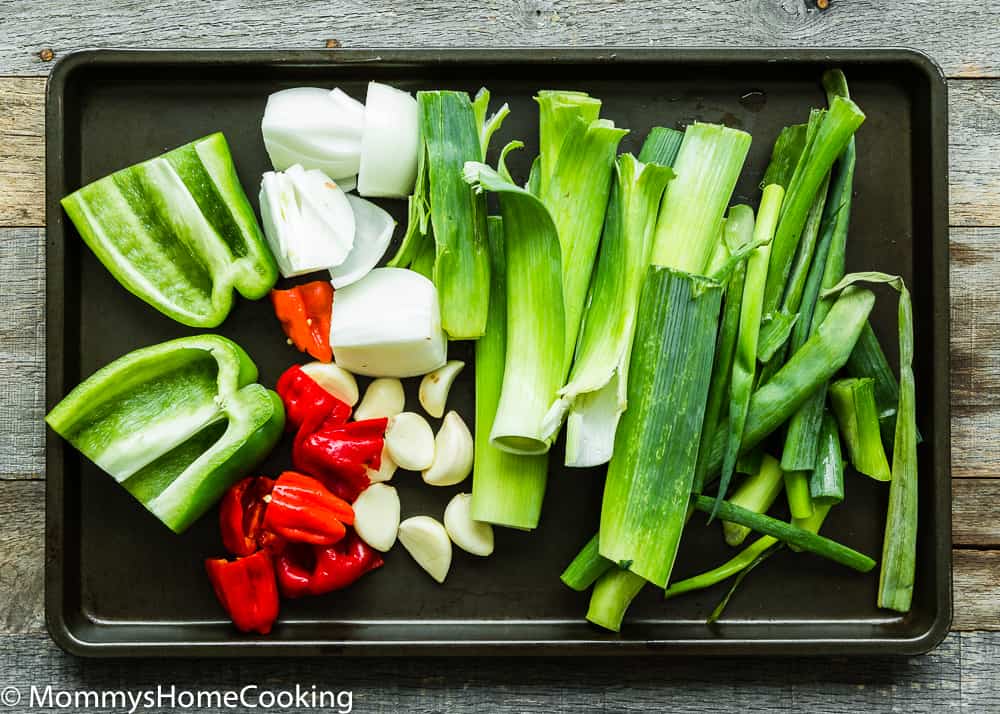
Step 4 – Make the Broth. Cook the meats with lots of veggies to produce a very tasty broth, which will be used to make the guiso and masa.
Step 5 – Make the Guiso. Make sure your guiso is not too runny. Read my tip below to thicken the guide.
Step 6 – Make the Masa. To make the masa, you will need the onoto oil and the broth in which you cooked the meats.
Step 7 – Prepare the Adornos. This is when the traditions of each family come to light! Each region of Venezuela has its own version of adornos, which can range from slices of eggs, and bacon, to chickpeas. Feel free to add whatever your family likes. Having all the topping ready to go make the assembling process so much easy.
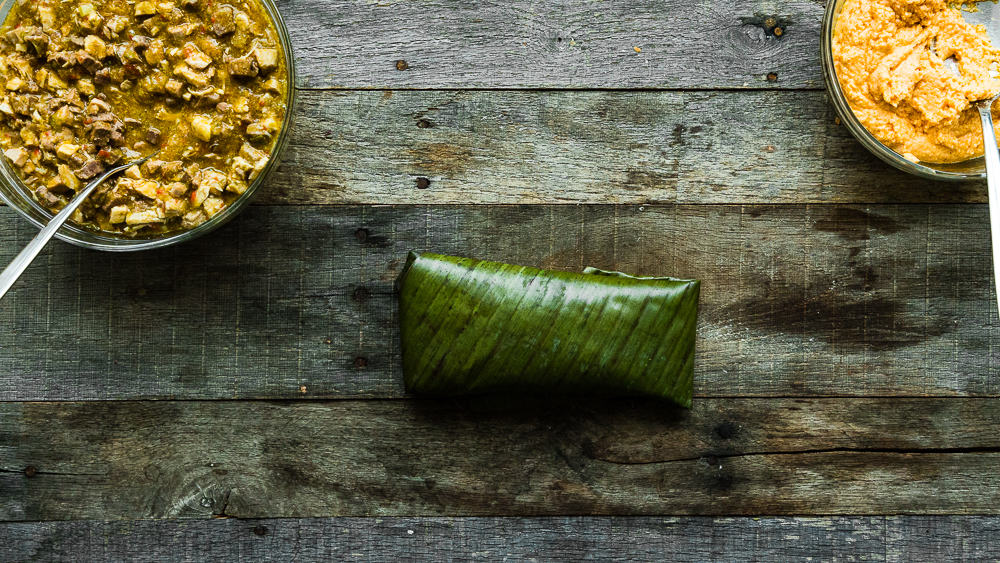
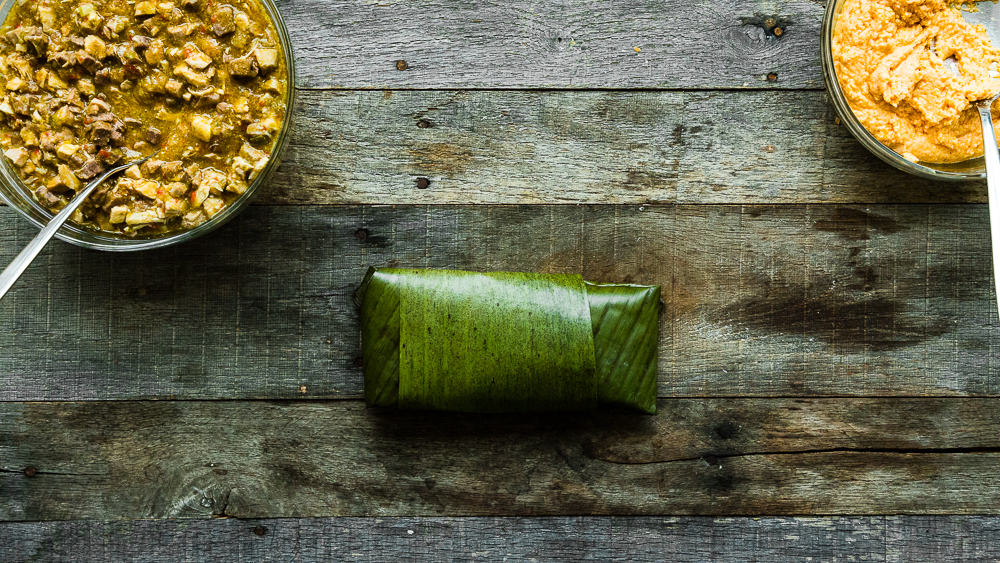
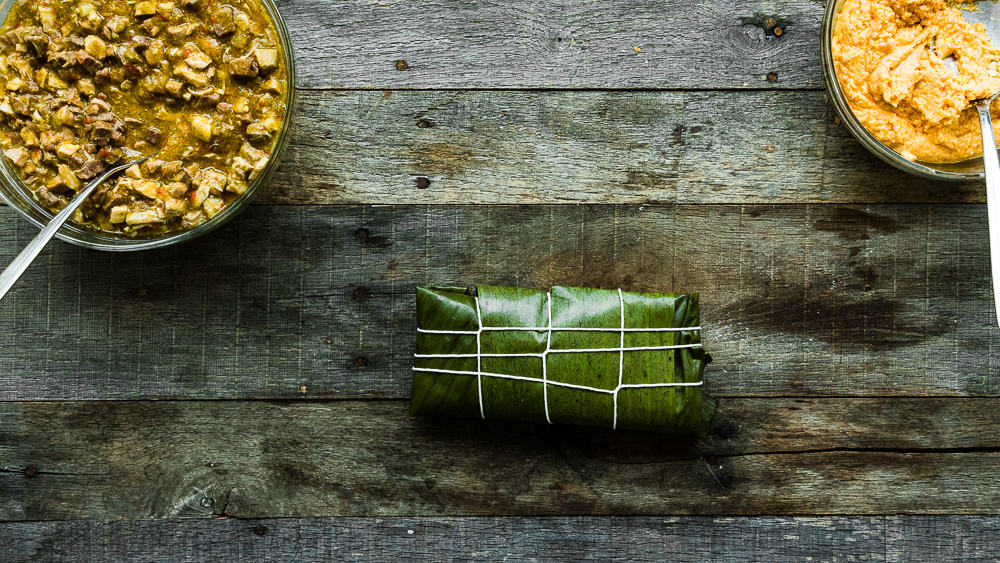
Step 8 – Assemble the Hallacas. Make sure to check out my step-by-step photos below.
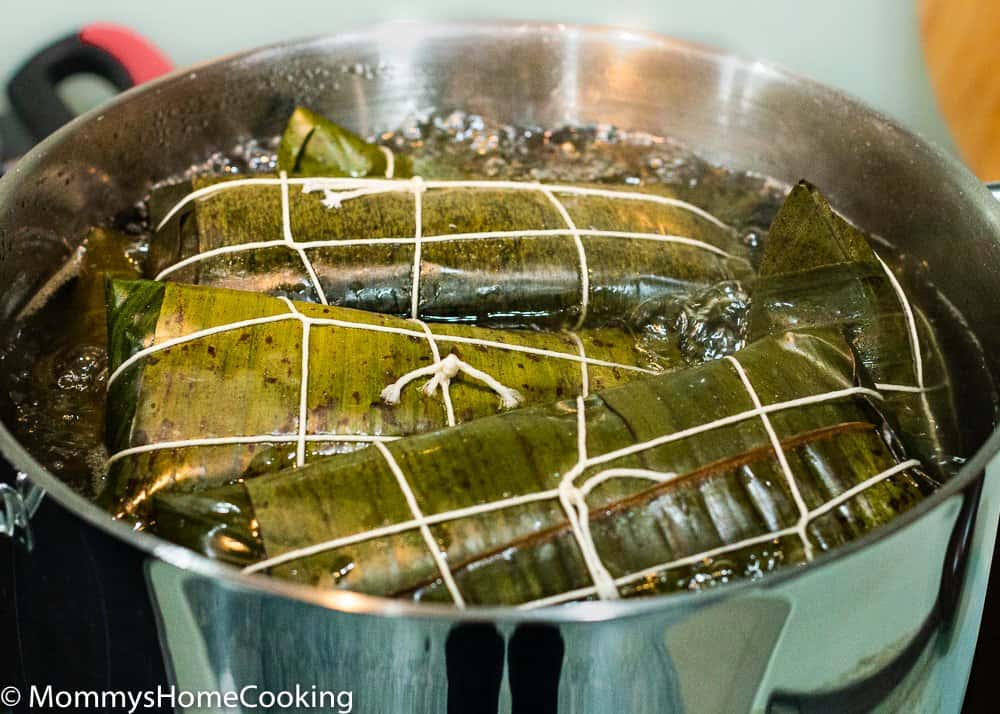
Step 9 – Cook. You probably will need to cook the hallacas in batches. Make sure that the hallacas are fully submerged in water for even cooking.
The banana leaves are essential for elaborating hallacas since they are responsible for giving that unique and unmistakable smoky flavor to the hallacas. Fortunately, due to the presence of Venezuelans around the world, these leaves are easy to find almost everywhere. You can find them in most major grocery stores in the USA, such as Walmart and Latin and Asian stores. When picking the leaves, make sure they are smoked; raw leaves will break when folding. The leaves must be cleaned and cut before use.
How To Clean And Prepare Banana Leaves
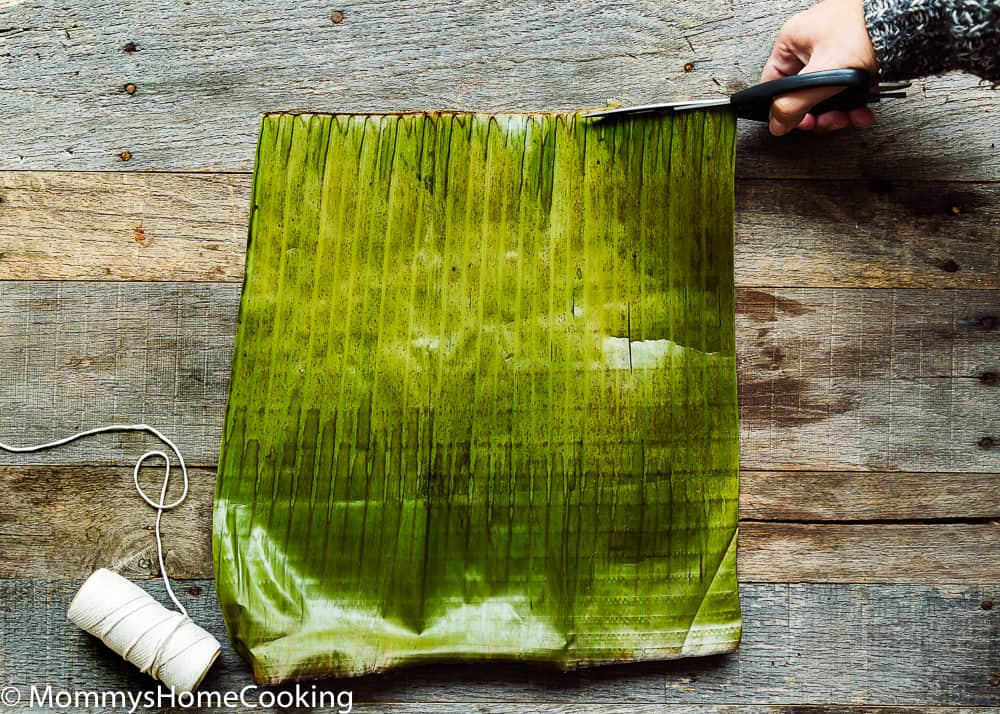
Clean the banana leaves well with a damp cloth and then dry them with a dry one. Then, remove the center stem (la vena) from the leaves to make the folding process easier. When cutting the stem with scissors, be careful not to break the leaf. Onoto, achiote, or annatto is the favorite food coloring in Latin America! It helps to add color to your food and adds a delicious, nutty, sweet, and earthy flavor. However, it has to be used in moderation since it has a strong flavor. To make hallacas, you will need the achiote oil for the meat filling-guiso and for the dought-masa.
How To Make Onoto/Achiote Oil – Aceite Onotado
Add oil to a medium saucepan at medium heat; when the oil is hot, add achiote seeds. Let achiote seeds render their color for 3-4 minutes. Don’t let the oil boil, or the achiote oil will be bitter. Remove from the stove and let cool. When it’s cool, strain through a fine-mesh strainer into a large container. Reserve the colored oil for later use.
Cook the Meats
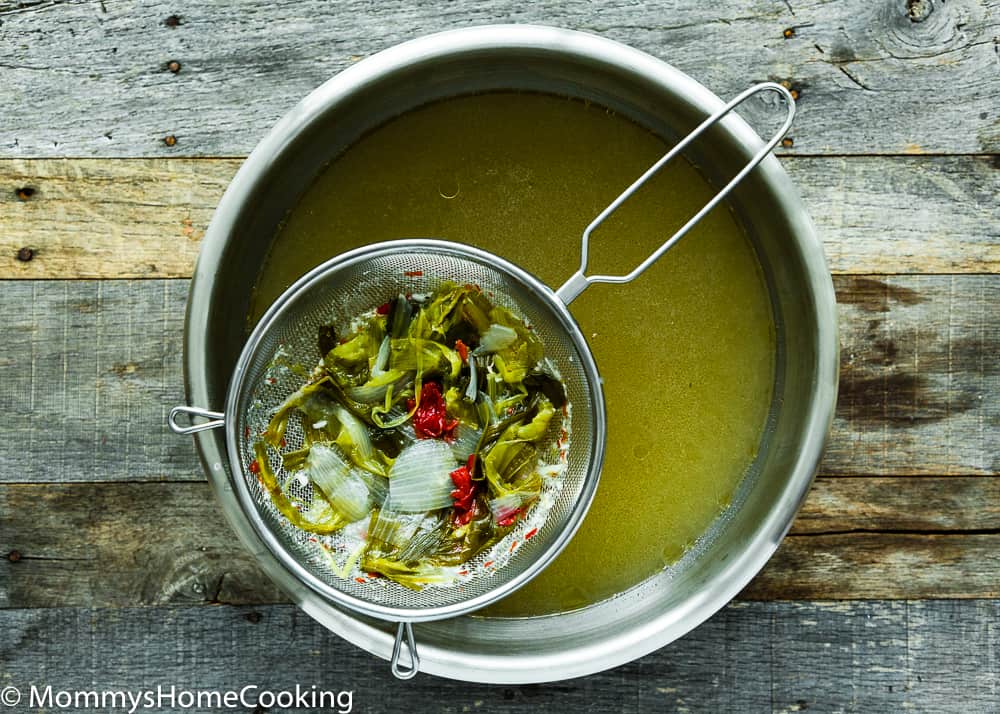
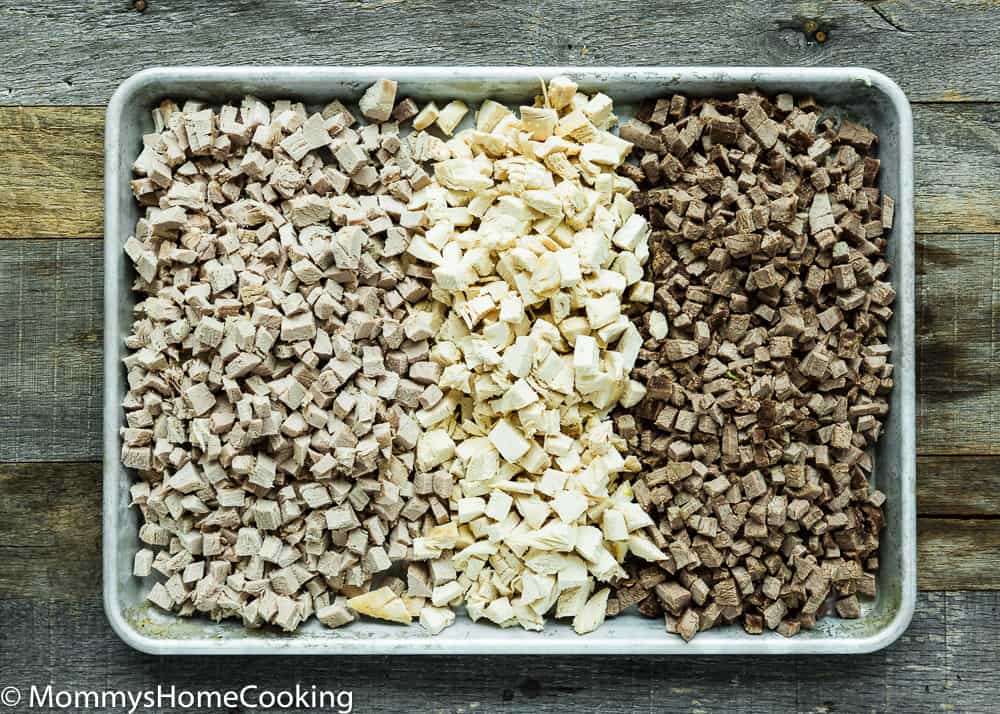
Add water into a large pot. Add salt, black pepper, beef bouillons, leeks leaves, green onion leaves, garlic cloves, onions, bell pepper, and sweet peppers. Bring to a boil over medium-high heat. When boiling, add the beef and pork; cook for 30 minutes. After 30 minutes, add the chicken breast and keep cooking for 20 more minutes. Then turn off the heat. Remove the meats from the broth and place them on a large plate. Reserve the broth. Let the meat cool enough to handle. Then, cut the beef, pork, and 4 chicken breasts (the other 2 breasts will be used as a topping) into small pieces. Make sure to remove any extra fat that the meat might have. Reserve. When the broth is cool, strain through a fine-mesh strainer. Reserve ALL the broth and discard the veggies.
The guiso, along with the masa, are the main stars of the hallacas! You really need to make a very flavorful guiso in order to make a good hallaca.
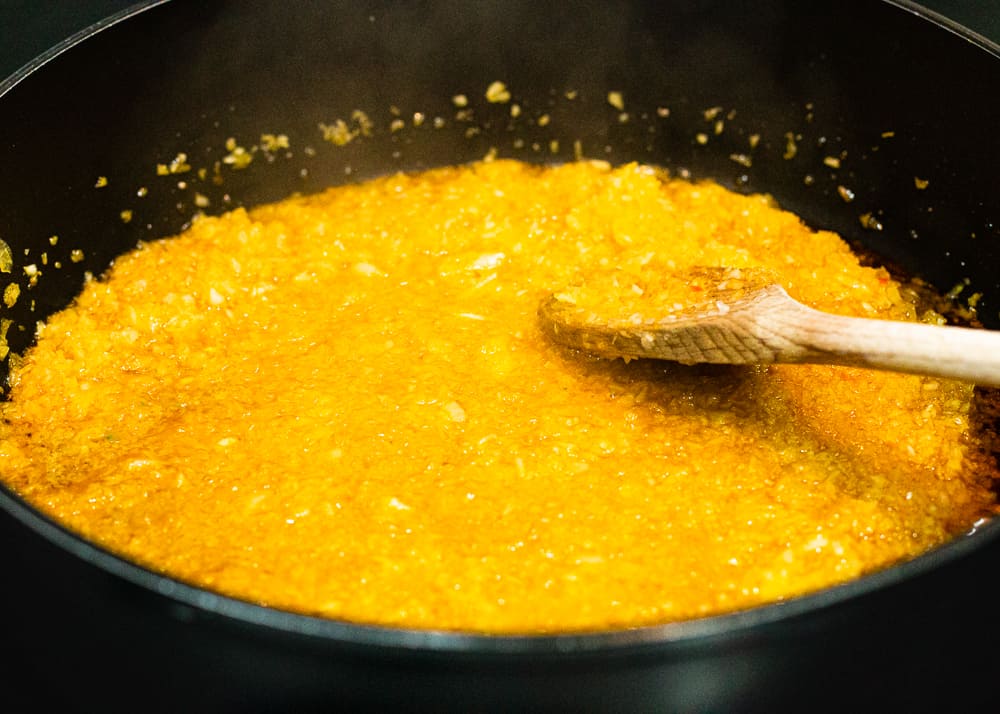
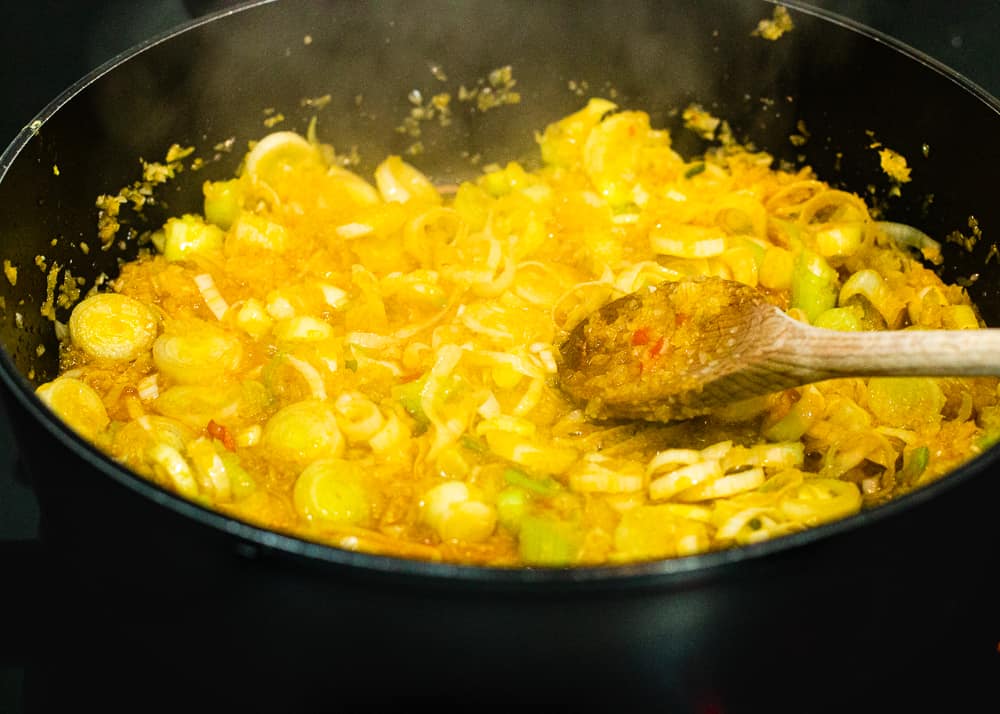
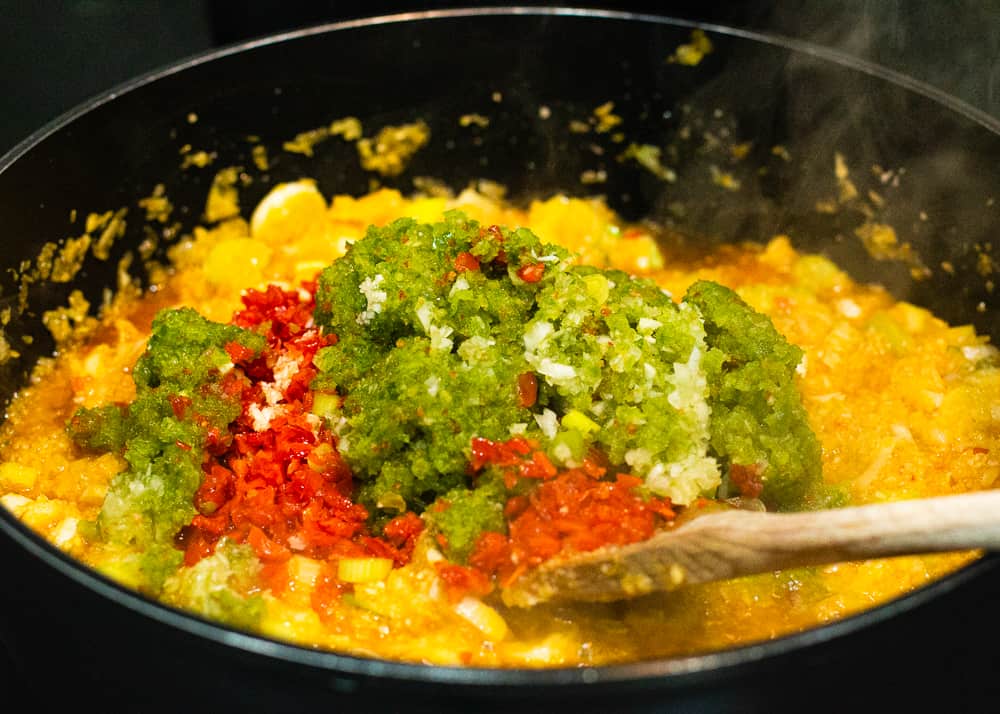
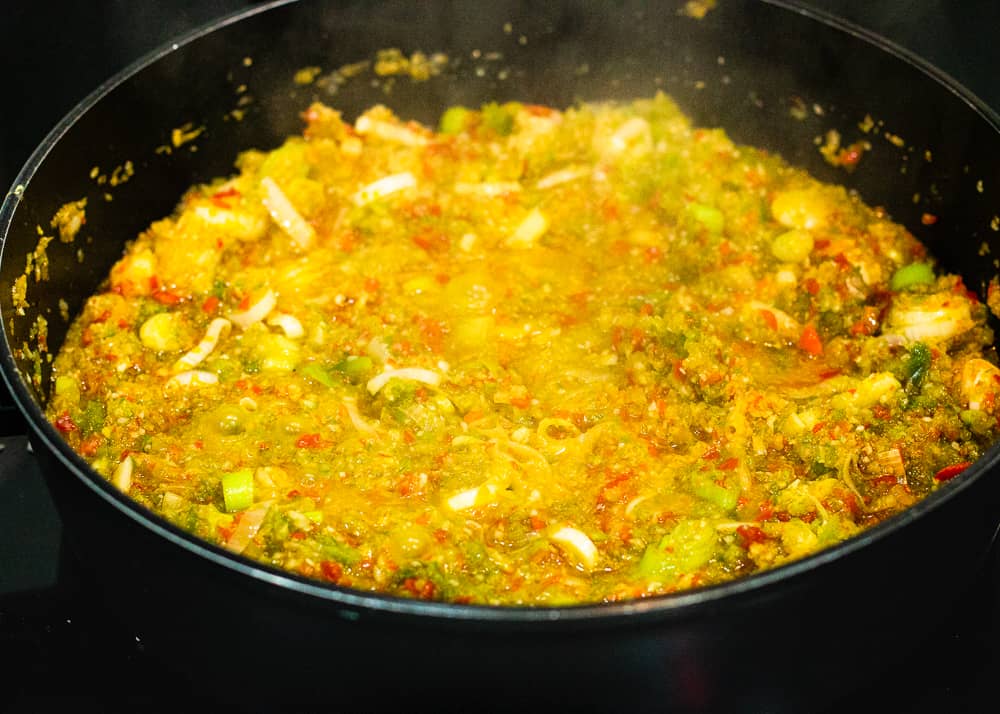
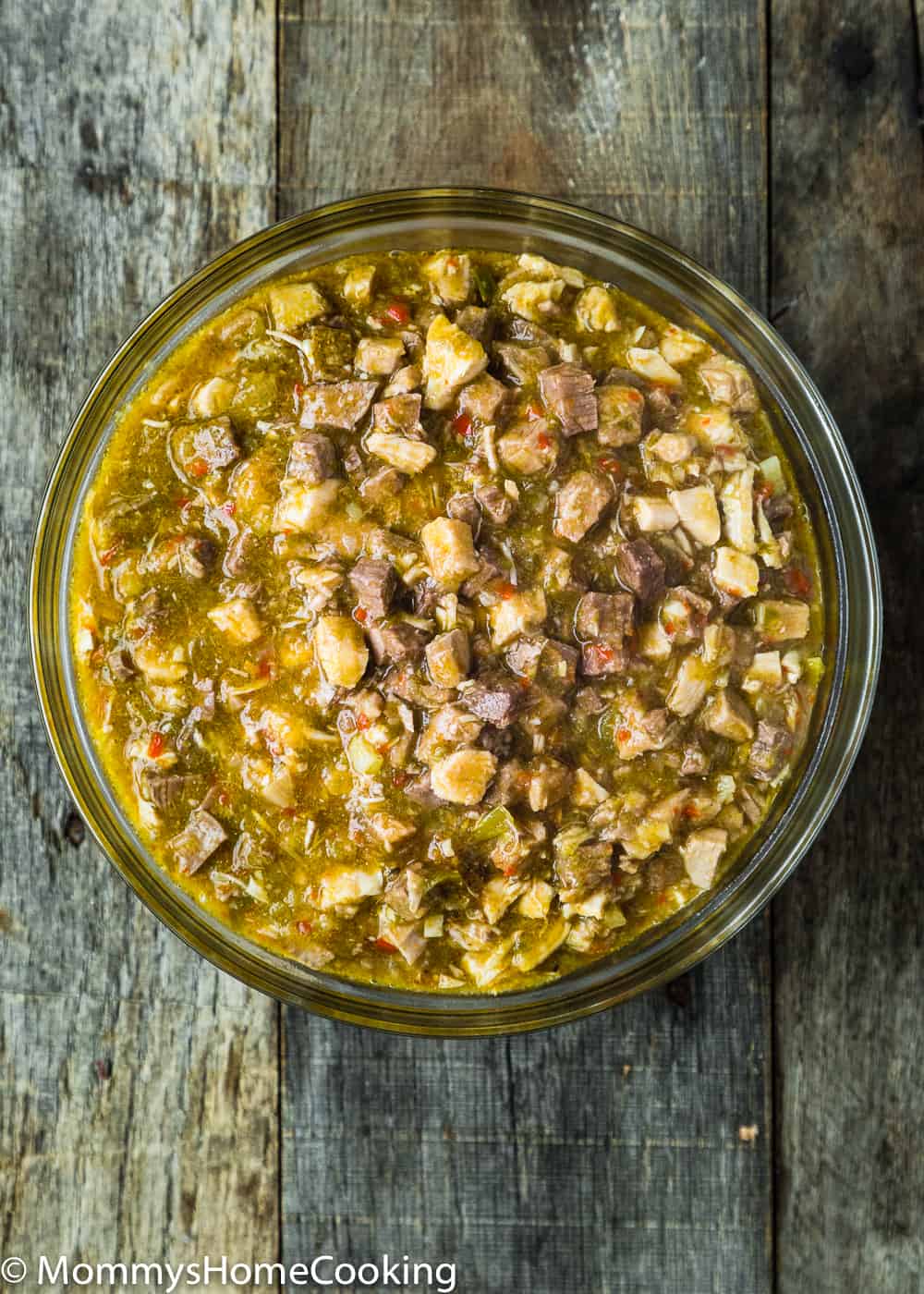
Add the cut meats and enough broth to cover the meats (I added 8 cups) into a large pot. Bring to a boil over medium-high heat. When boiling, reduce heat to medium-low. Add 1 cup of achiote oil to a large skillet. When hot, add onion and cook for 3-4 minutes; make sure the oil is not too hot that it is going to toast the onion. Then add the leeks and green onion; continue cooking for 2-3 minutes. Add the garlic; mix to combine and cook until fragrant and soft, about 3 minutes. Finally, add the bell pepper and sweet peppers and cook for 5 minutes. Add the sautéed veggies (sofrito) to the pot with the meat and broth. Mix well and let it cook for 5 – 8 minutes. Add capers, mix, and continue cooking for 5 minutes. In a mixing bowl, combine the sweet wine and Harina P.A.N. Mix vigorously to prevent lumps from forming. Add the wine/harina mixture to the meats. You need to add the wine mixture and mix at the same time to prevent lumps from forming. Taste and add more salt if needed. If the guiso is too pale, you can add more achiote oil to add more color. Let the guiso cook for 5 – 8 more minutes. The guiso must be thick, not runny, so if needed, you can dissolve more Harina P.A.N in water or broth and add it to the guiso to thicken. Turn off the heat and let the guiso cool.
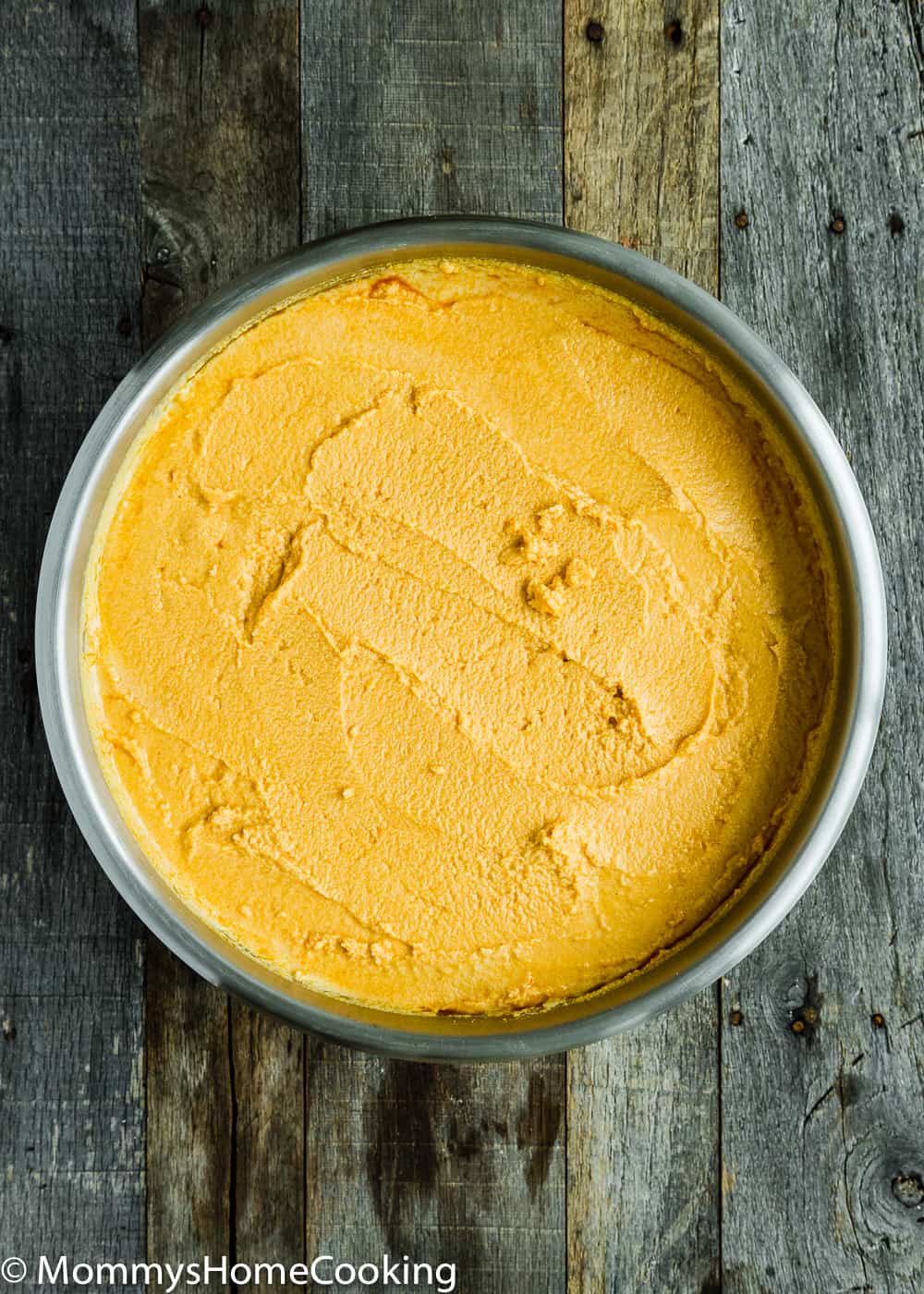
The dough–masa is made with the reserved broth from the meat cooking, achiote oil, and Harina P.A.N. Unlike many recipes, my mom’s recipe requires a dough with a spreadable consistency. You don’t need to make dough balls and then flatten them for this recipe but just spread it with a spoon, so no more dirty and messy hands, YAY. According to my mom, this trick helps to keep the masa tender, soft, and thin.
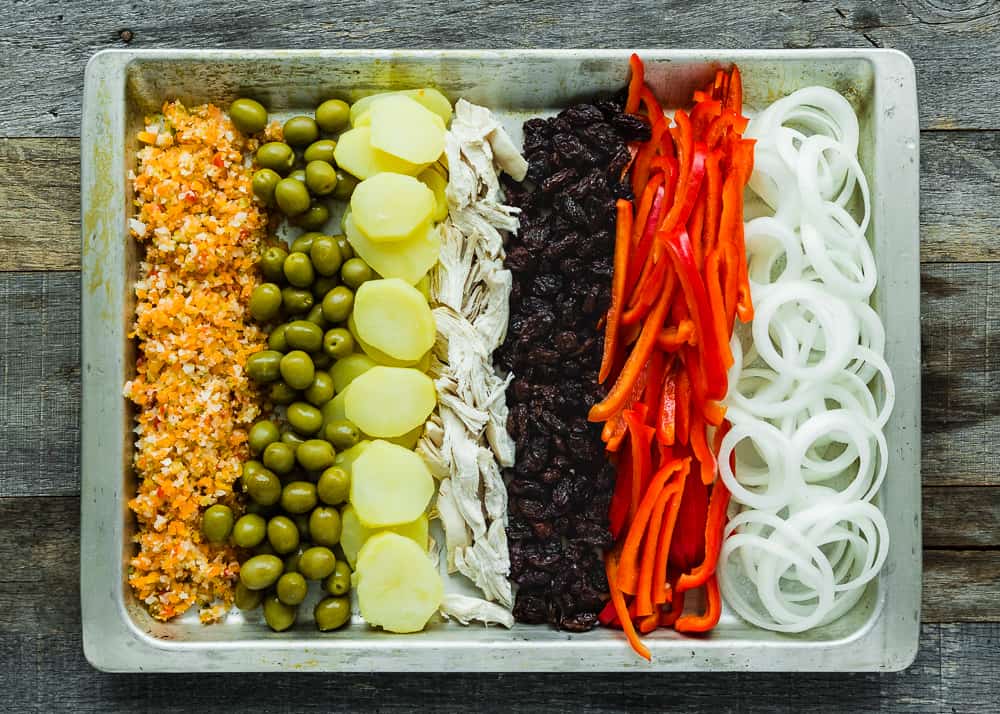
Toppings – Adornos … this is when the traditions of each family come to light! Each region of Venezuela has its own version of adornos, which can range from slices of eggs, and bacon, to chickpeas. Feel free to add whatever your family likes. Our family’s recipe calls for:
Yellow onions, cut into rings Red bell peppers, cut into thin strips Black raisins Green Olives Italian Mix Giardiniera pickles (encurtidos), finely chopped Potatoes, cook and cut into slices Chicken breast, cut into thin strips
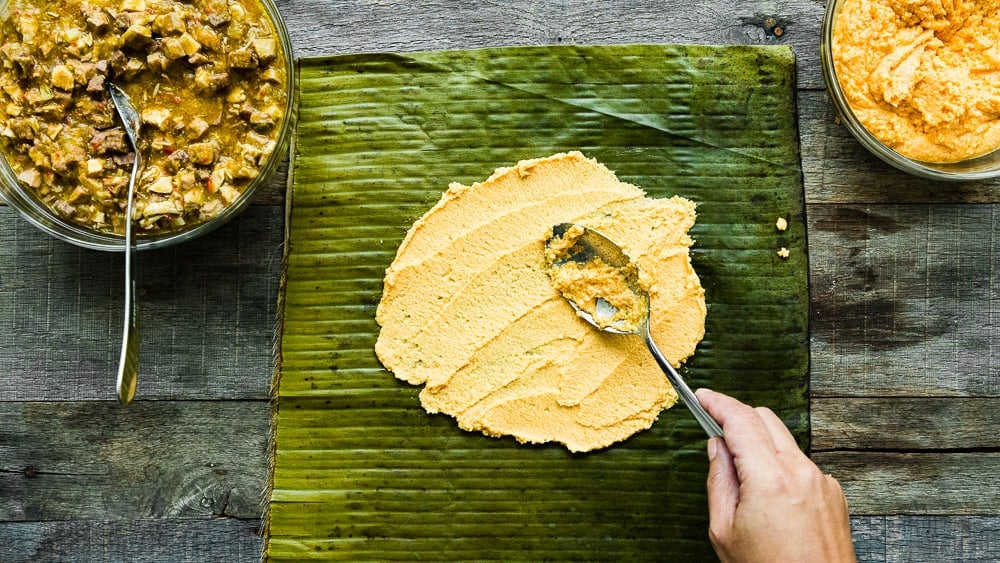
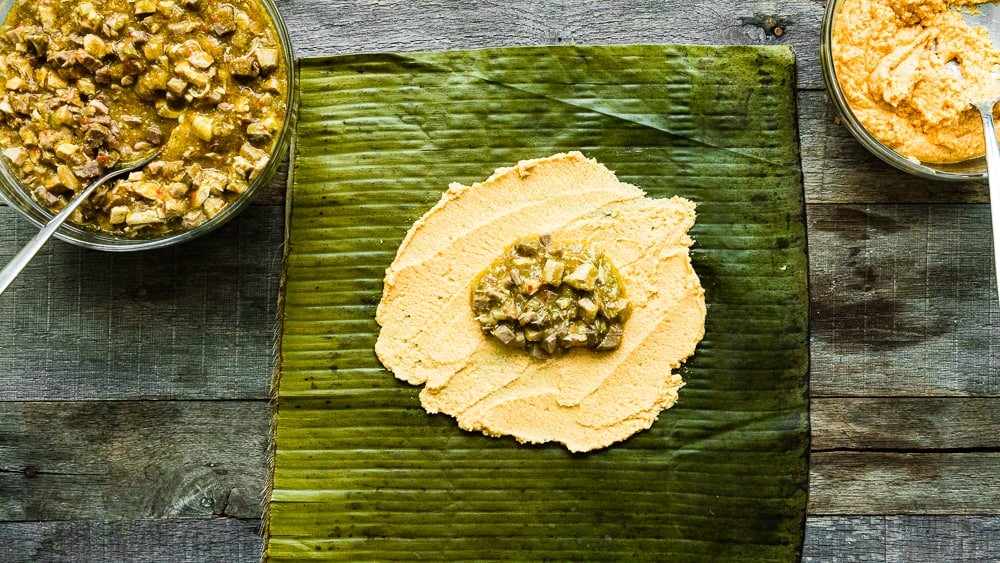
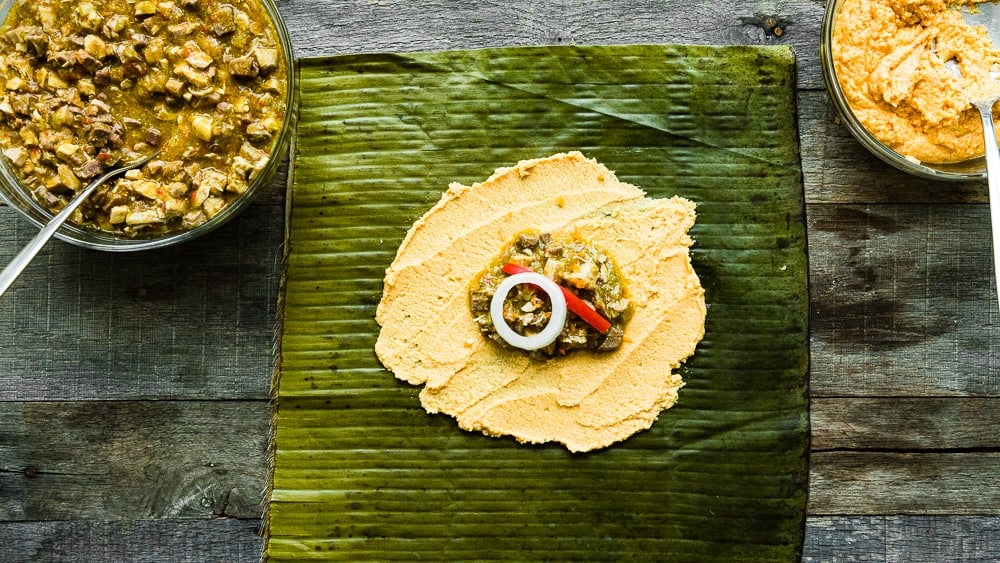
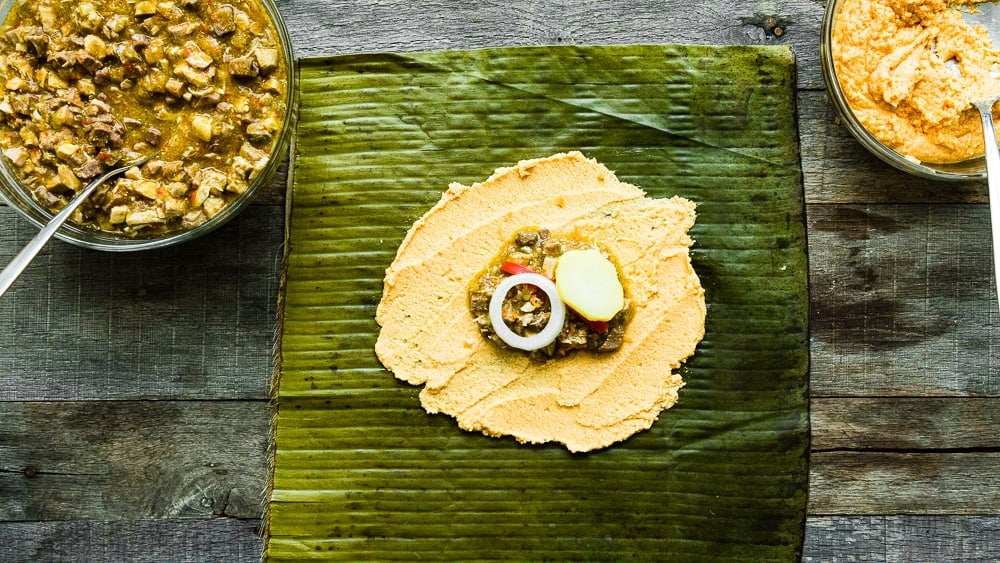
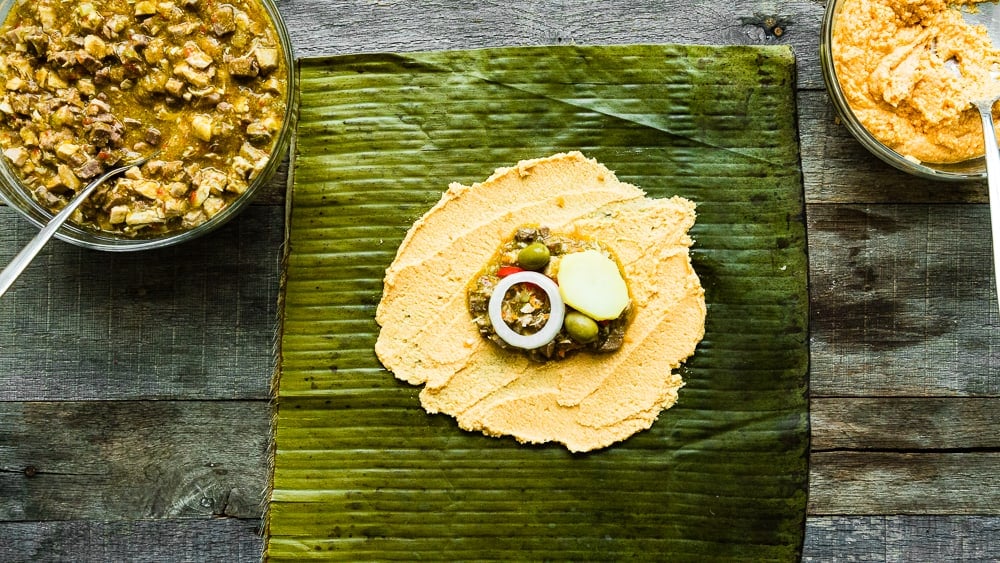
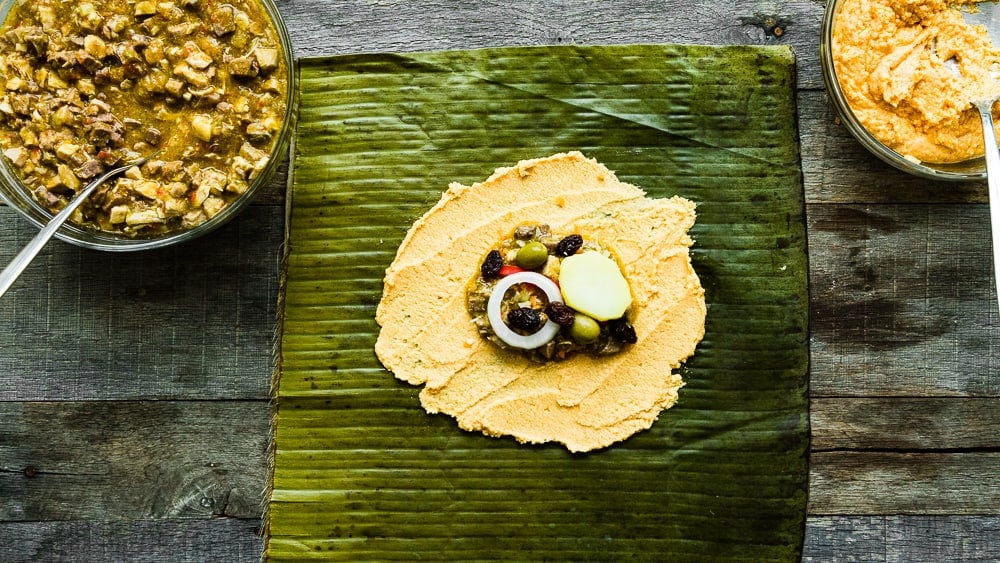
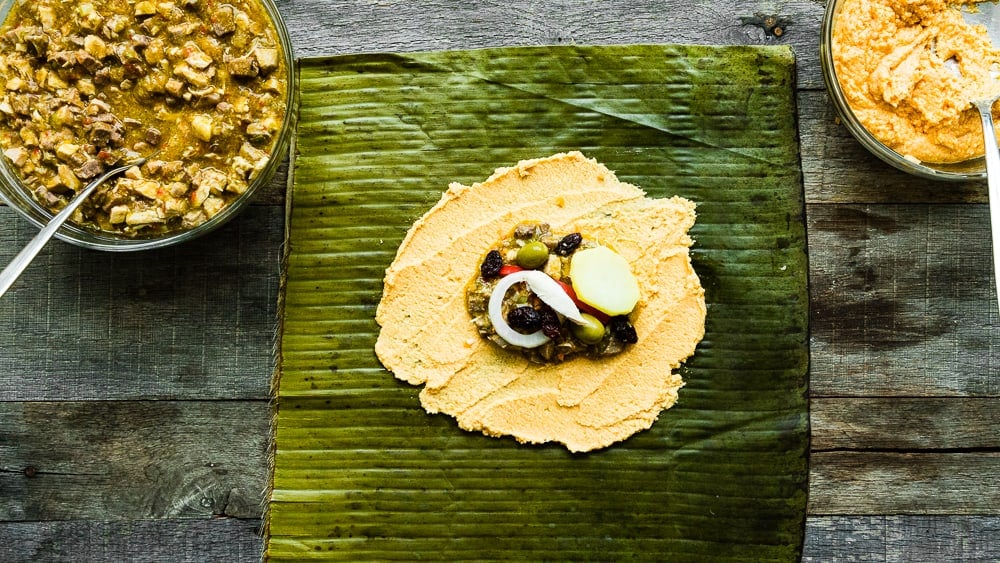
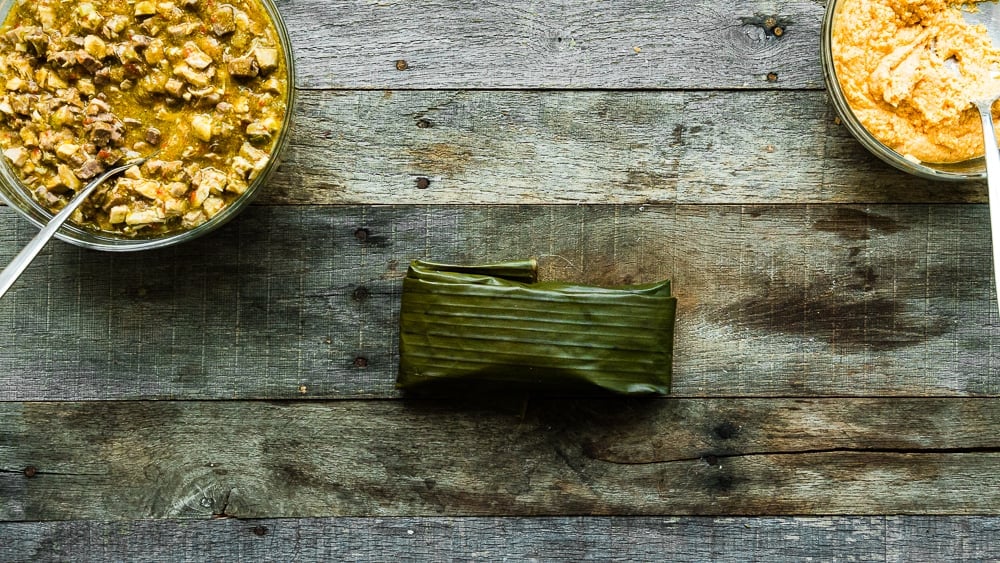
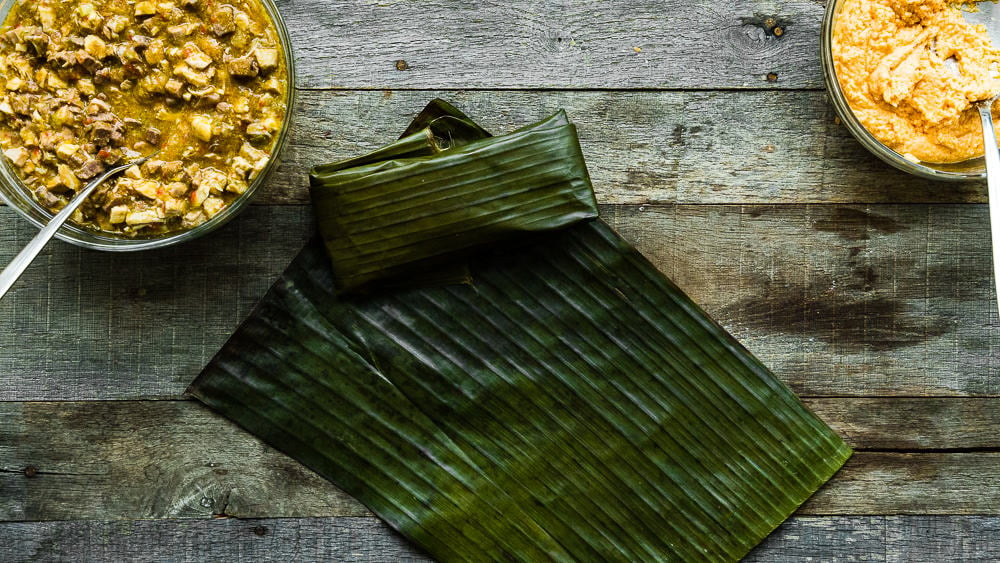
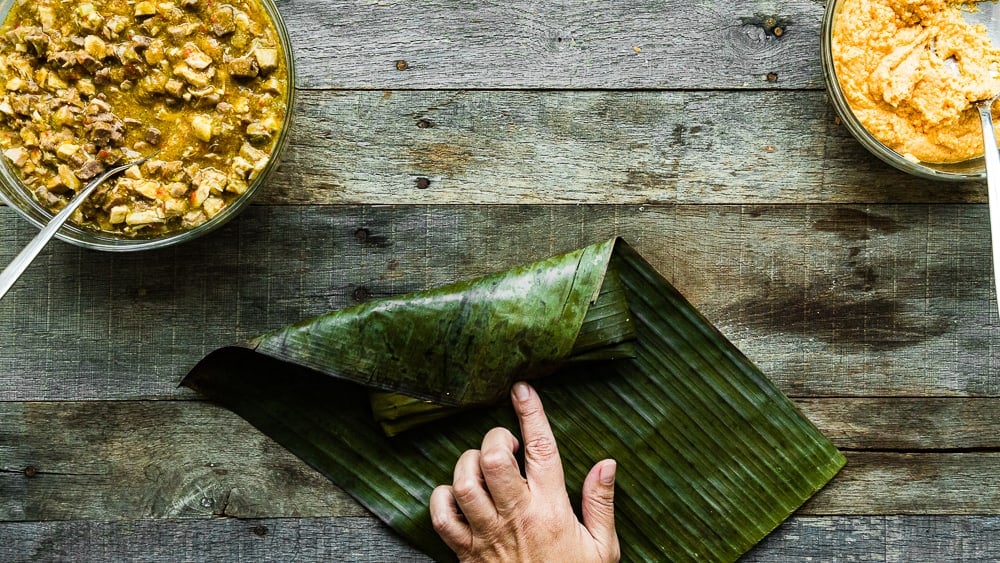
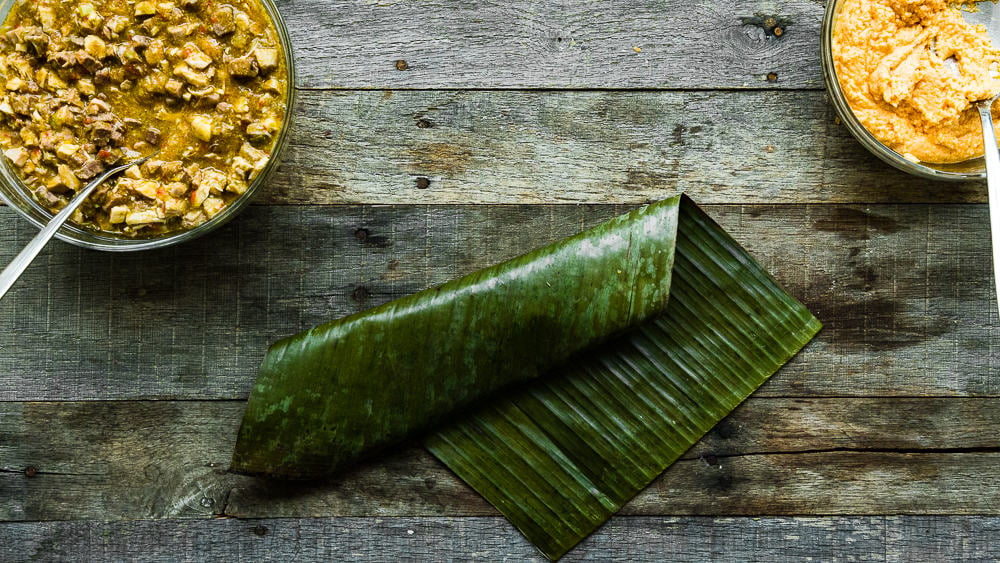
My mom also uses sliced almonds, which I didn’t add due to my daughter’s nut allergy. Place the main banana leaf over a flat surface. Make sure the leaf vein is horizontal to make the folding process easier. Spread, in the middle of the leaf, with a spoon ½ cup of dough until it is 1/6 of an inch or 4 mm thick. Add, in the middle of the dough, 1/3 cup of guiso (meat filling). Then, start adding the toppings of your choice. I did this: I sprinkled ¼ teaspoon of chopped Italian Mix Giardiniera pickles over the guiso. Then, I added a ring of onion, one strip of red pepper, a potato slice, 2 green olives, 5-6 raisins, and one strip of chicken breast. Close the hallaca: Take the top and bottom edges of the leaf and attach them upward; make sure the top and bottom edges of the dough join together. Then, create a fold until it is completely sealed. Fold the other two ends towards the inside. Then, place the fold perpendicularly on the second sheet and wrap it. Fold the ends towards the inside. Finally, wrap around the fold with the third leaf (faja) just to hold everything together. Tie the hallacas with cooking twine. Cross them three times in each direction (horizontal and vertical) and close with a knot or bow, almost as you would with a gift.
Make sure your broth-caldo is super flavorful.
Beef: In Venezuela, the most popular cut used to make hallacas are ganzo or pulpa negra. In the USA, you can use Round Tip Roast or Round Tip Steak, Bottom Round Roast, or Sirloin Tip Roast. Pork: I usually use Rib End Boneless Pork Roast or a Boneless Loin. Chicken: To make my life easier, I like to use boneless, skinless chicken breasts but feel free you use bone-in chicken if you like.
Thicken the guiso. To thicken the guiso, mix sweet red wine and Harina P.A.N. When adding the wine mixture to the guiso, you need to add it and mix vigorously at the same time to prevent lumps from forming. Cut all the guiso veggies in a food processor to save time. Red Sweet Wine: The traditional wine to make hallacas is Sagrada Familia. Unfortunately, this wine is very difficult to find in other countries, so I found out that the sweet marsala wine or sweet Porto wine are a good substitute. Olives: I used whole green olives because that is what my mom uses, but manzanilla olives stuffed with pimiento will work fine, too; just make sure to rinse them before using them to reduce the amount of vinegar. Onions: To maximize the use of the onions, I like to cut them into rings, then I pick the rings I will use as a topping and the remaining onions I use for the meat filling/guiso. Make sure you buy frozen or smoked banana leaves. The fresh ones will break when wrapping.
Reheating Venezuelan Hallacas
To reheat cooked hallacas, add water and salt to a pot; bring to a boil over high heat. Add the hallacas you wish to reheat (make sure the water is covering them). Lower the heat to medium and cook; partially cover the pot with the lid for 20 -25 minutes. Remove the hallacas from the pot. Drain the hallacas, cut the cooking twine, remove the leaf and enjoy! I want to share a trick, even though I am risking that my mom will disinherit me. LOL. If you are short of time, you can reheat them in the microwave. Just place the Hallaca on a plate, reheat for 1 minute, then flip and reheat for 30-45 more sec. This works best for one hallaca at a time.
More Venezuelan Recipes You’ll Love!
Venezuelan Pernil Venezuelan Eggnog Ponche Crema Pan de Jamon Polvorosas Cookies Venezuelan Flan Quesillo Venezuelan Chocolate Marquesa Browse more recipes…
P.S. A splash of hot sauce is highly recommended! Also, a glass of Homemade Ponche Crema,
Recipe Card